DRILL BITS
author: CATHY
2025-08-09
Drill Bits Material:
1. High-Speed Steel (HSS)
Definition: Alloy steel containing tungsten, molybdenum, chromium, vanadium.
Properties:
Moderate heat resistance (up to 600°C)
Excellent toughness & impact resistance
Cost-effective for general-purpose drilling
Applications: Wood, plastic, soft metals (aluminum, brass).
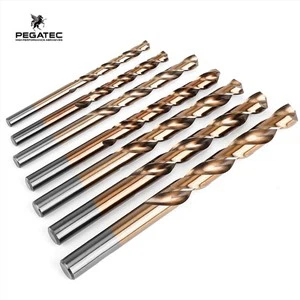
2. Cobalt Steel (HSS-Co)
Definition: HSS with 5–8% cobalt additive.
Properties:
Enhanced heat resistance (750°C+)
Superior hardness & wear resistance
Applications: Hardened steel, stainless steel, cast iron.
3. Carbide (Tungsten Carbide)
Subtypes:
Solid Carbide: Entire bit made of carbide particles bonded in cobalt.
Pros: Extreme hardness, precision for small diameters.
Cons: Brittle, prone to chipping.
Carbide-Tipped: Carbide cutting edges welded to steel body.
Pros: Balances durability and cost.
Applications: Concrete, tile, composites, aerospace alloys.
4. Diamond-Coated
Definition: Steel core coated with synthetic diamond particles.
Properties:
Highest abrasion resistance
Minimal heat generation
Applications: Glass, ceramics, carbon fiber, hardened stone.
5. Titanium Coatings
Common Types:
TiN (Titanium Nitride): Gold coating, reduces friction.
TiAlN (Titanium Aluminum Nitride): Purple-black coating, withstands 800°C+.
Function: Extends HSS drill life by 3–5× via surface hardening.
Material Selection Guide:
Material Best For Avoid
HSS Soft metals, wood, plastics Hardened steels, abrasives
Cobalt Steel Stainless steel, cast iron Extreme high-temp scenarios
Carbide Concrete, composites, ceramics High-impact jobs
Diamond Brittle non-metallics (glass, PCB) Ferrous metals
Key Tip: Coating type (e.g., TiAlN) significantly enhances base material performance—always match bit material to workpiece hardness!
Definition: Alloy steel containing tungsten, molybdenum, chromium, vanadium.
Properties:
Moderate heat resistance (up to 600°C)
Excellent toughness & impact resistance
Cost-effective for general-purpose drilling
Applications: Wood, plastic, soft metals (aluminum, brass).
2. Cobalt Steel (HSS-Co)
Definition: HSS with 5–8% cobalt additive.
Properties:
Enhanced heat resistance (750°C+)
Superior hardness & wear resistance
Applications: Hardened steel, stainless steel, cast iron.
3. Carbide (Tungsten Carbide)
Subtypes:
Solid Carbide: Entire bit made of carbide particles bonded in cobalt.
Pros: Extreme hardness, precision for small diameters.
Cons: Brittle, prone to chipping.
Carbide-Tipped: Carbide cutting edges welded to steel body.
Pros: Balances durability and cost.
Applications: Concrete, tile, composites, aerospace alloys.
4. Diamond-Coated
Definition: Steel core coated with synthetic diamond particles.
Properties:
Highest abrasion resistance
Minimal heat generation
Applications: Glass, ceramics, carbon fiber, hardened stone.
5. Titanium Coatings
Common Types:
TiN (Titanium Nitride): Gold coating, reduces friction.
TiAlN (Titanium Aluminum Nitride): Purple-black coating, withstands 800°C+.
Function: Extends HSS drill life by 3–5× via surface hardening.
Material Selection Guide:
Material Best For Avoid
HSS Soft metals, wood, plastics Hardened steels, abrasives
Cobalt Steel Stainless steel, cast iron Extreme high-temp scenarios
Carbide Concrete, composites, ceramics High-impact jobs
Diamond Brittle non-metallics (glass, PCB) Ferrous metals
Key Tip: Coating type (e.g., TiAlN) significantly enhances base material performance—always match bit material to workpiece hardness!
PEGATEC CURVED FLAP DISC
Abrasive Discs (Grinding Wheels) vs. Flap Discs: Key Differences and Applications
Related Article

All our lithium batteries adopt high-grade raw materials and undergo strict multi-channel quality inspection, including cell screening, aging testing, safety impact test and cycle life detection.
Premium & Certified Lithium Battery Solutions | Stable Quality & Custom Support for Your Business